About Me

As of summer 2026, I am a PhD student in Computer Science at ODU, working as a TA and RA in the School of Cybersecurity. My research focuses on AI and cyber-physical systems security.

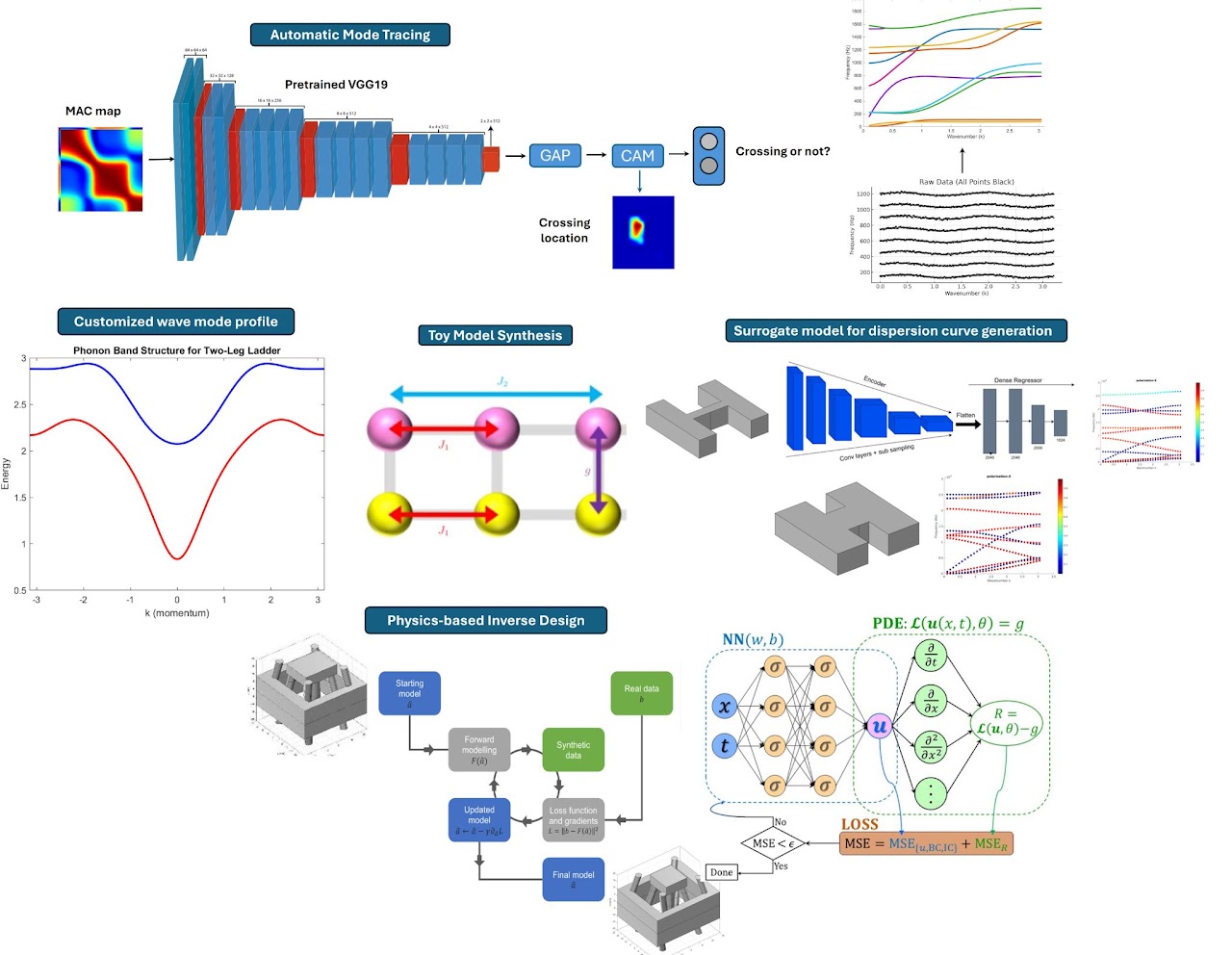
From Jan 2025 to Dec 2025 , I worked as an RA at UVM in ME department, focusing on designing automated, and physically meaningful algorithms using physics-based machine learning and signal processing techniques to tackle wave propagation problems in acoustic metamaterial design, including wave-mode tracing, prediction, and inverse design.

Prior to that, I earned a BSc and MSc in EE from the University of Guilan in July 2020 and Feb 2024, respectively, and completed high school at NODET, all in Rasht, Iran. I worked on designing vibrometric approaches at the DSP Lab by developing signal and data processing methods to characterize defects in multi-layered structures, including CFRP, aluminum alloys, and sandwich panels, using broadband ultrasonic guided wavefield data.

Erfan Basiri

Research Experience

AI and Cyber-physical Systems Security and Safety| Acoustic Metamaterial Inverse Design | Ultrasonic Guided Waves Processing for Defect Characterization in Multilayered Structures

Acoustic Metamaterial Inverse Design

Automatic mode tracing, toy model synthesis, surrogate model for dispersion curve generation and physics-based inverse design of acoustic metamaterials

[Research Asistant (UVM): 2025]: Physics-Based Machine Learning and Signal Processing for Automated Wave-Mode Tracing, Prediction, and Inverse Design of Acoustic Metamaterials (Slides)


Ultrasonic Guided Waves Processing for Defect Characterization in Multilayered Structures

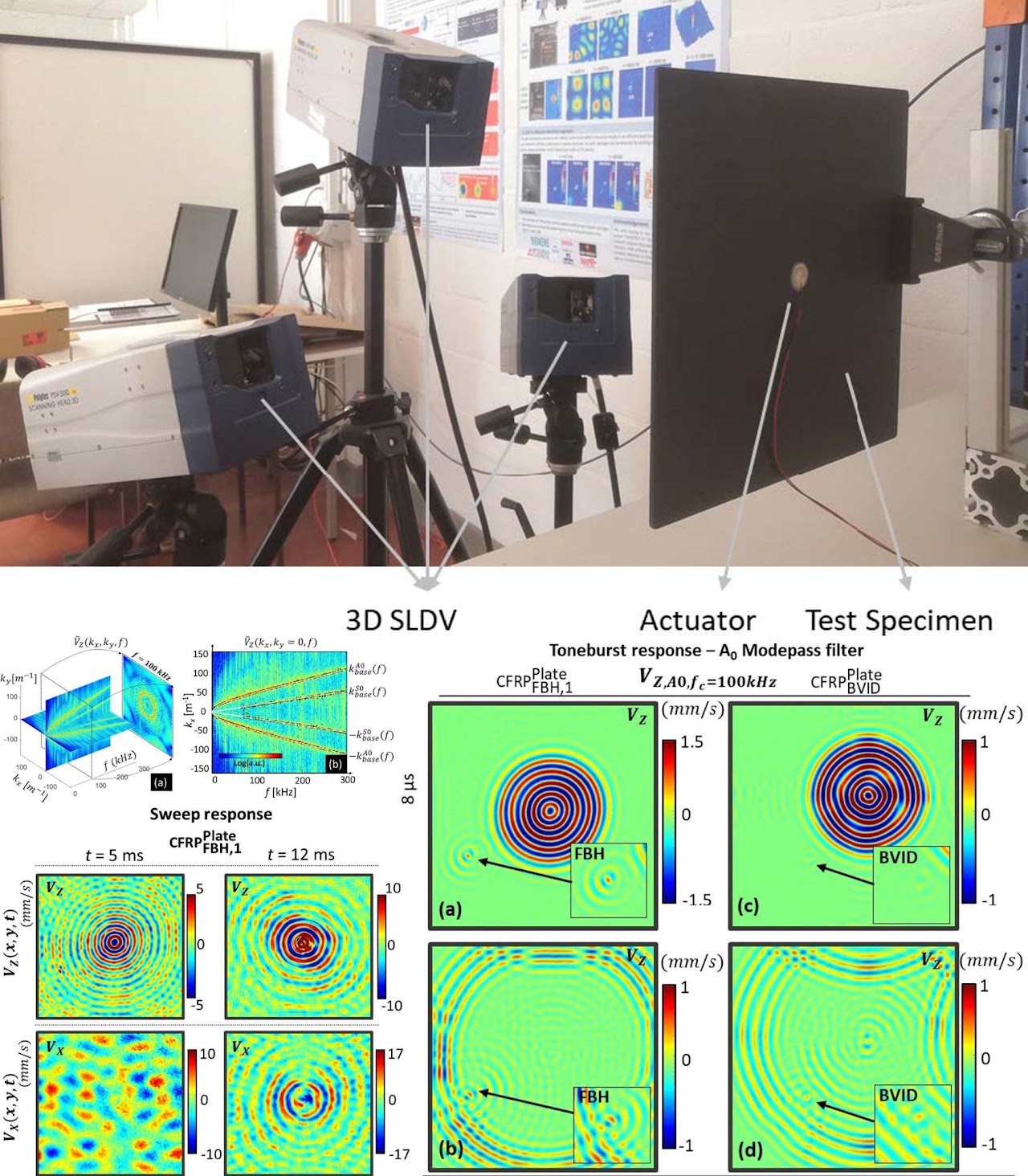
Guided wavefield on an aircraft wing 3D scanning laser Doppler vibrometer setup with actuator and test specimen, and measured wavefields
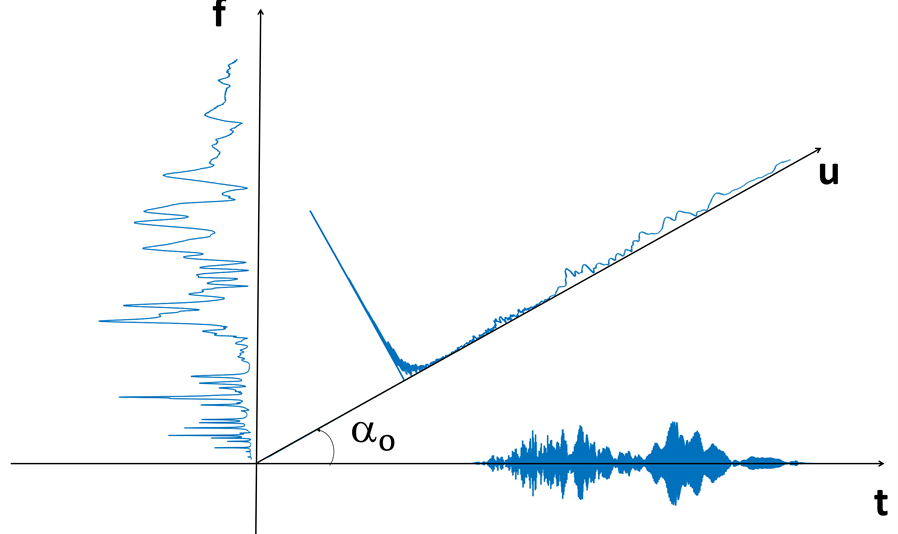
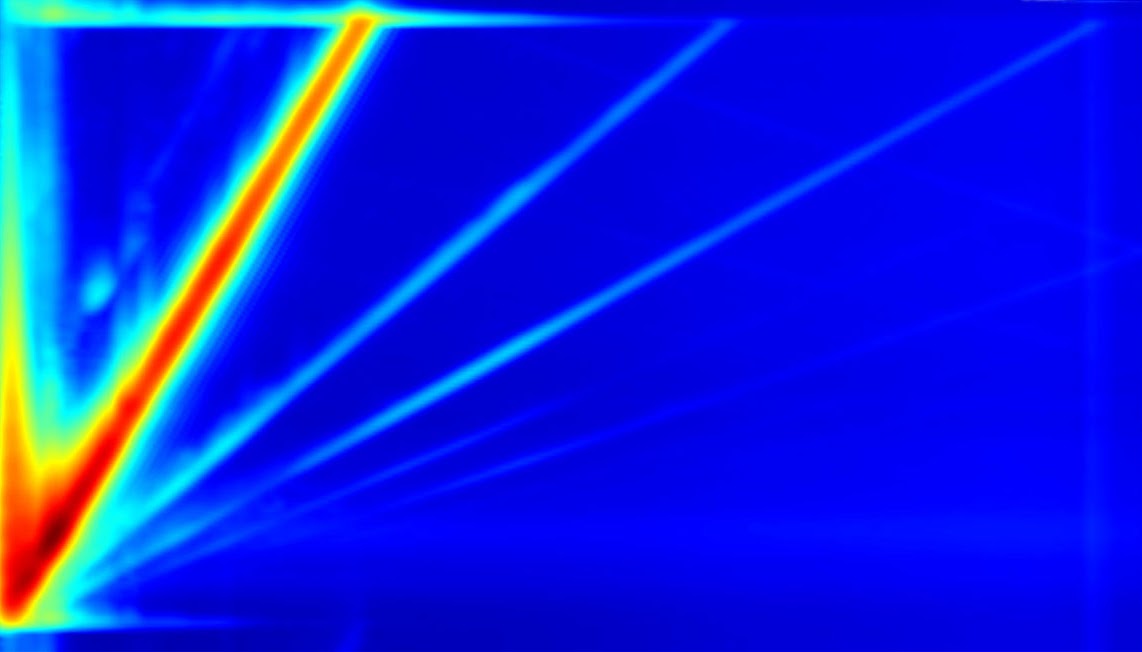
Time-frequency representation of a broadband chirp Spectrogram

[Thesis: 2024]: Time-frequency analysis of broadband ultrasonic guided wavefield for composite defect characterization

Erfan Basiri and Reza P.R. Hasanzadeh

  • In this thesis, the application of time-frequency representation transformations are elaborated in ultrasonic guided wavefield, both in presence and absence of noise, to design automated defect detection/depth estimation algorithms.

  • The obtained results demonstrate that the proposed method can effectively detect different kinds of damage regardless of being deep or shallow in noise presence.

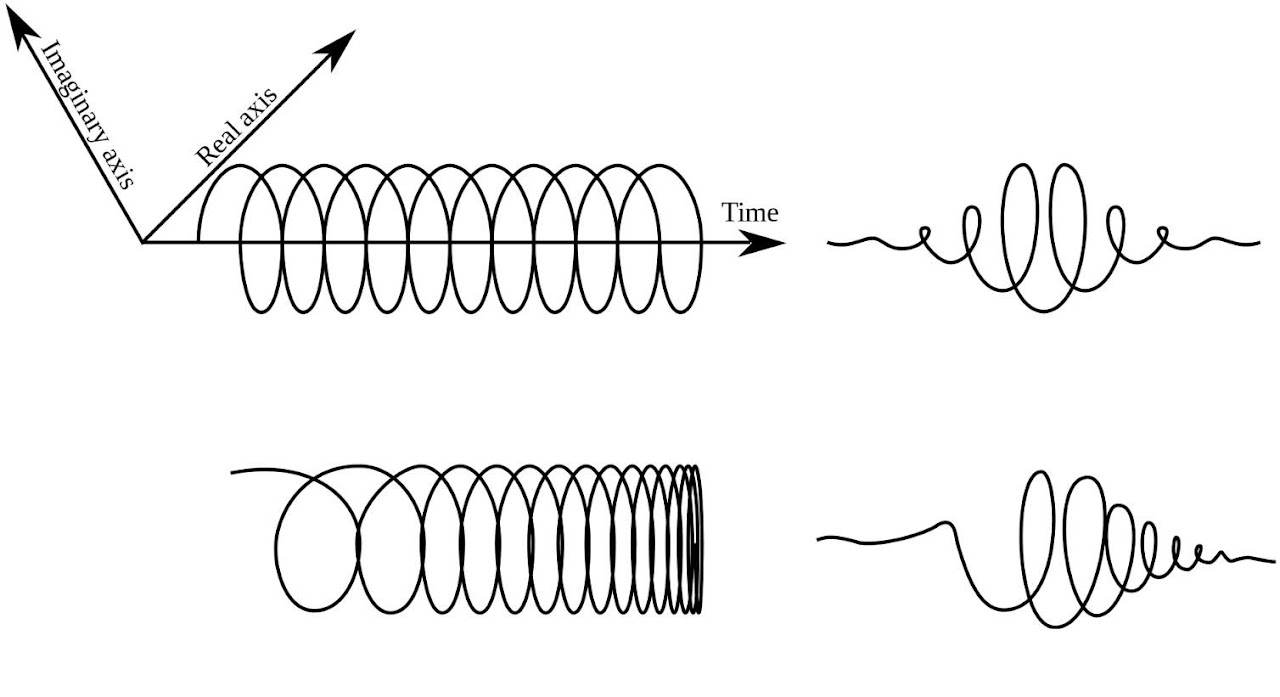
Complex time-frequency representation
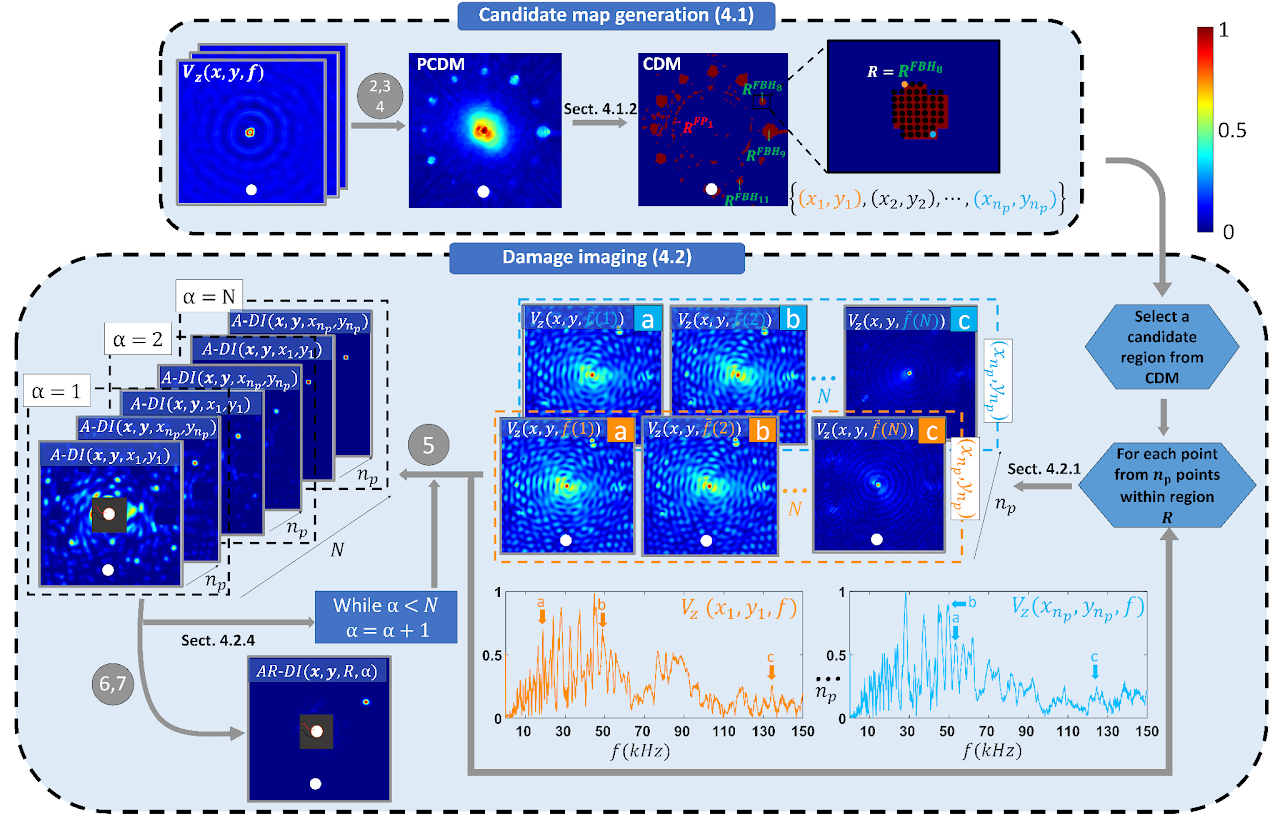
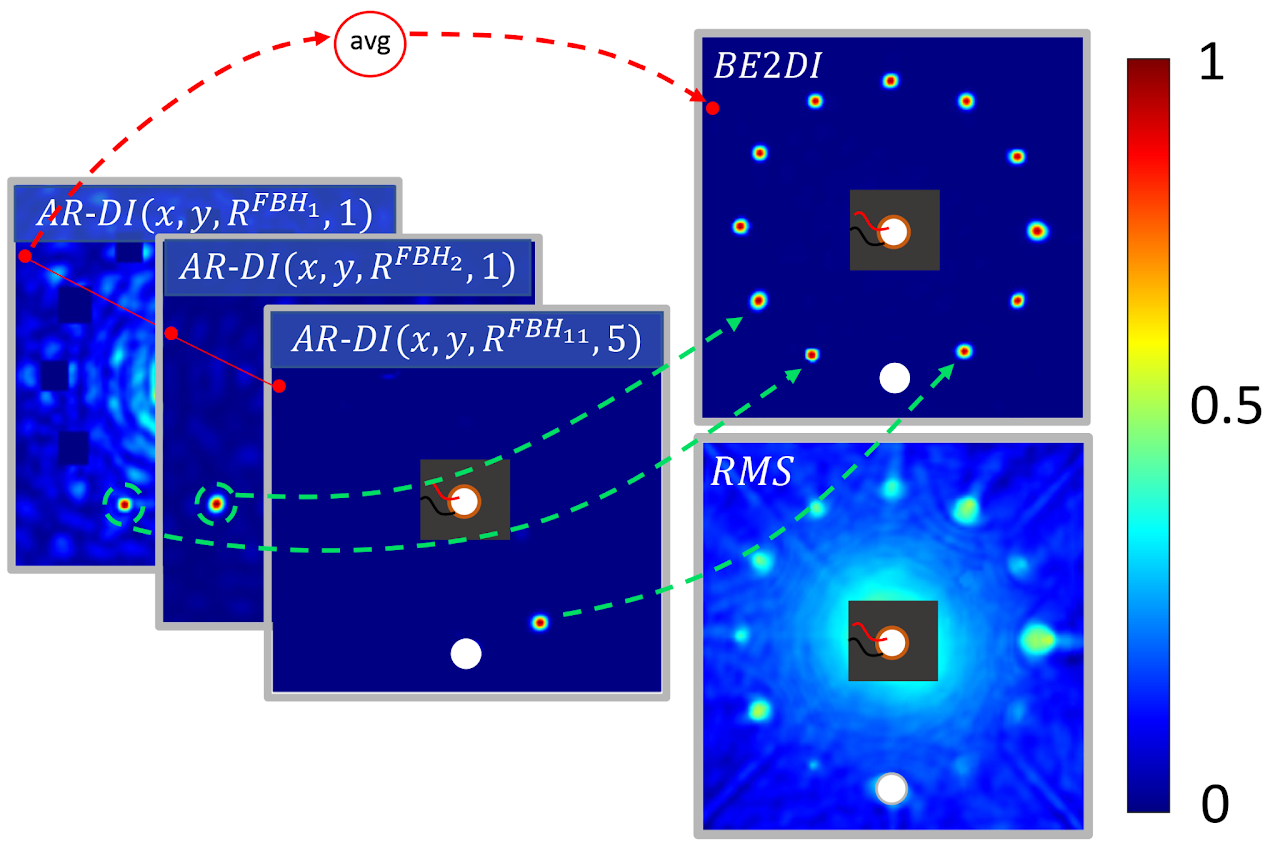
BE2DI flowchart BE2DI damage maps

[Journal: Measurement - 2024]: Damage Imaging in Plates by Evaluating Local Entropy in Guided Wavefield Data (Elsevier / Paper)

Erfan Basiri, Reza P.R. Hasanzadeh and Mathias Kersemans

  • This paper presents a new algorithm called broadband entropy-based two-stage damage imaging (BE2DI) for the detection and imaging of defects in multi-layer plates.

  • The method differentiates defects from either local scattering phenomena of propagating Lamb waves or locally increased vibrational activity for stimulated global plate resonances with exploiting higher vibrational activity of full-field broadband vibration signals at defective regions and distinct spatial behavior of defects and artifacts.

  • Using these features, first a candidate damage map is constructed by means of an iterative thresholding based on descriptive statistics of broadband data. Afterwards, an adaptive regional damage index based on local entropy is introduced, which utilizes operational deflection shapes to process previously identified candidate regions and subsequently reveal both shallow and deep damages.

  • BE2DI can be seen as an automated local defect resonance identification approach in the case of shallow defects.

  • Multiple plates having various defect types with different sizes and depths are investigated. Broadband chirp signals are used to excite the plates using low-power piezoelectric actuators, and vibrational data is registered by 3D scanning laser Doppler vibrometry.

  • The obtained results demonstrate that the proposed method can effectively detect different kinds of damage regardless of being deep or shallow.

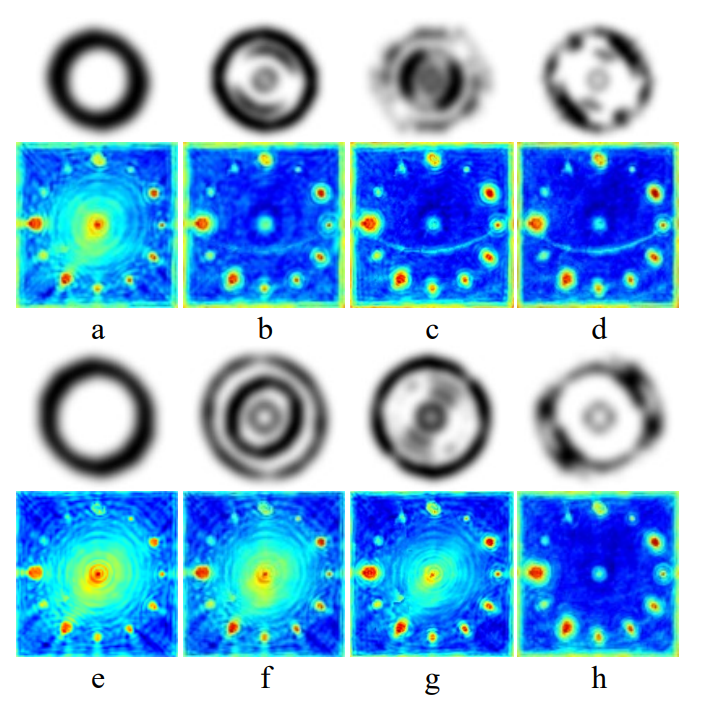
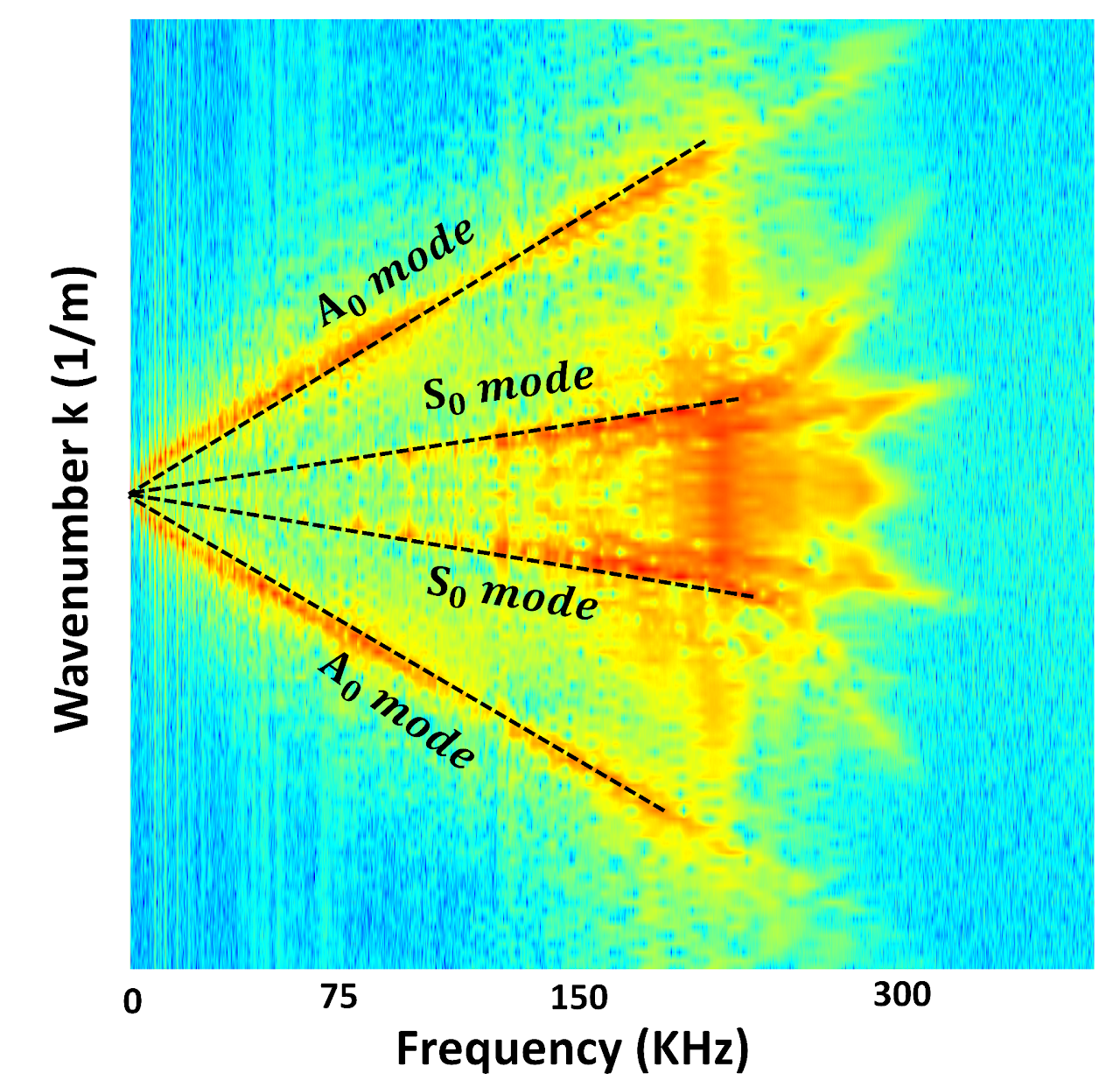
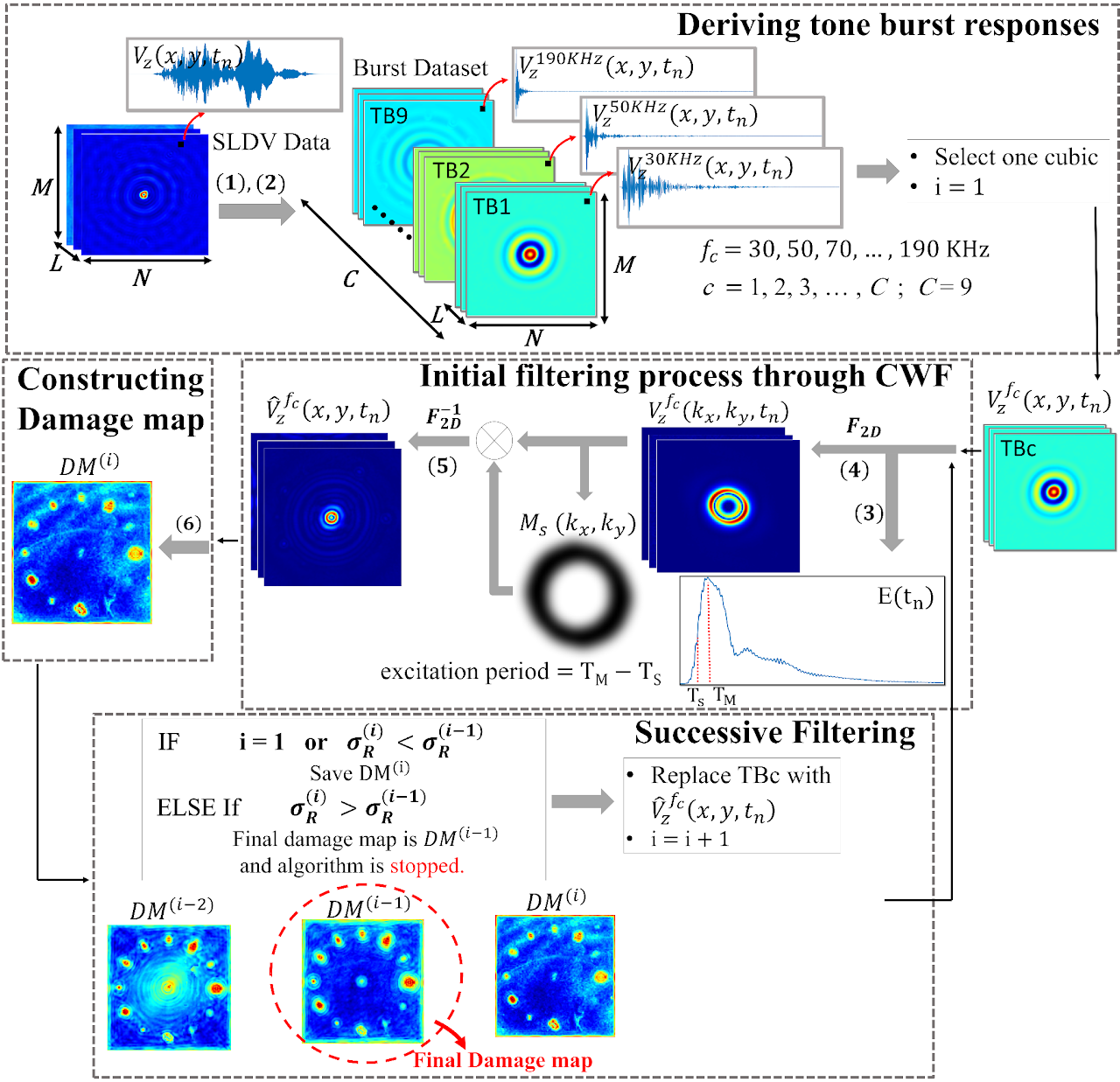
Successive wavenumber filtering results Wavenumber-frequency dispersion with A0 and S0 modes

[Conf. Paper: ICSPIS2021 - 2022]: A Successive Wavenumber Filtering Approach for Defect Detection in CFRP using Wavefield Scanning (IEEE / Paper)

Erfan Basiri, Reza P.R. Hasanzadeh and Mathias Kersemans

  • Owing to the high sensitivity of carbon fiber reinforced polymer (CFRP) to internal damages, defect detection through Non-destructive testing (NDT) is deemed an essential task.

  • Scattered waves corresponding to deep defects are usually obscured by other waves due to their weak amplitude. A successful method to highlight these waves is to use wavenumber filtering (WF).

  • WF suffers from the assumption that the optimal frequency range of excitation signal is known beforehand, which is not always available. Another drawback is that when more than one type of guided waves mode exist, this method is not capable of highlighting desirable waves or vibrations sufficiently.

  • In this paper, full wavefield images are first constituted by exciting the guided waves via broadband chirp signal and registering them with scanning laser Doppler vibrometery (SLDV).

  • Then, a successive wavenumber filtering (SWF) approach is introduced, which efficiently removes undesirable higher order guided wave modes, and removes the need to know a priori the optimal excitation frequency.

Successive wavenumber filtering flowchart
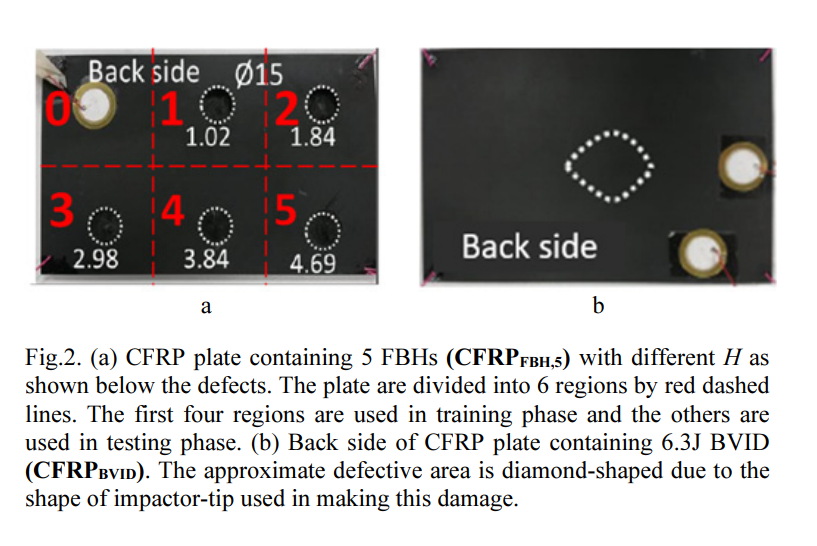
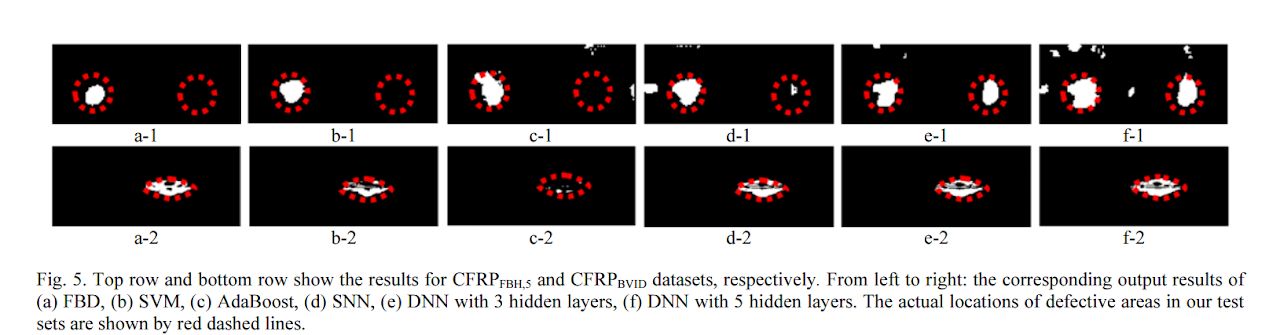
CFRP plate with flat-bottom holes and BVID DNN defect image retrieval results

[Conf. Paper: MVIP2020 - 2020]: A DNN-based Image Retrieval Approach for Detection of Defective Area in CFRPs through LDV Data (IEEE / Paper)

Erfan Basiri, Reza P.R. Hasanzadeh, Saman Hadi and Mathias Kersemans

  • Carbon fiber reinforced polymer (CFRP) materials, due to their specific strength and high consistency against erosion and corrosion, are widely used in industrial applications; however, there are also disadvantages: e.g. they are prone to different kinds of internal defects which could jeopardize the structural integrity.

  • Recently, local defect resonance (LDR), a subcategory of ultrasonic nondestructive testing, has been successfully used to solve this issue. However, the drawback of the technique is that the frequency at which the LDR occurs must be known and it is not capable to be used for the detection of deep defects.

  • In this paper, a deep neural network (DNN) methodology is employed to remove this limitation and to acquire a better defect image retrieval process and also to achieve a model for the approximate depth estimation of such defects.

[1] Full-Field Elastic Wave Imaging and Processing for Non-Destructive Inspection of Fiber-Reinforced Polymers

[2] PPINN: Parareal Physics-Informed Neural Network for time-dependent PDEs